
The 2010 Thailand 100-Baht Commemorative Banknote
The 2010 Thailand 100-baht commemorative banknote represents a rare intersection of circulating currency and commemorative art. Issued on 4 May 2010 by the Bank of Thailand, the note marks the 60th wedding anniversary of King Bhumibol Adulyadej and Queen Sirikit. Although officially categorized as a numismatic product, the note was produced in a finite quantity of 9,999,999 pieces and designed to circulate in parallel with the standard 100-baht note of the same series (catalogued as B175). This dual identity—both commemorative and functional—makes the issue especially significant for collectors and scholars.
Physical Description and Design
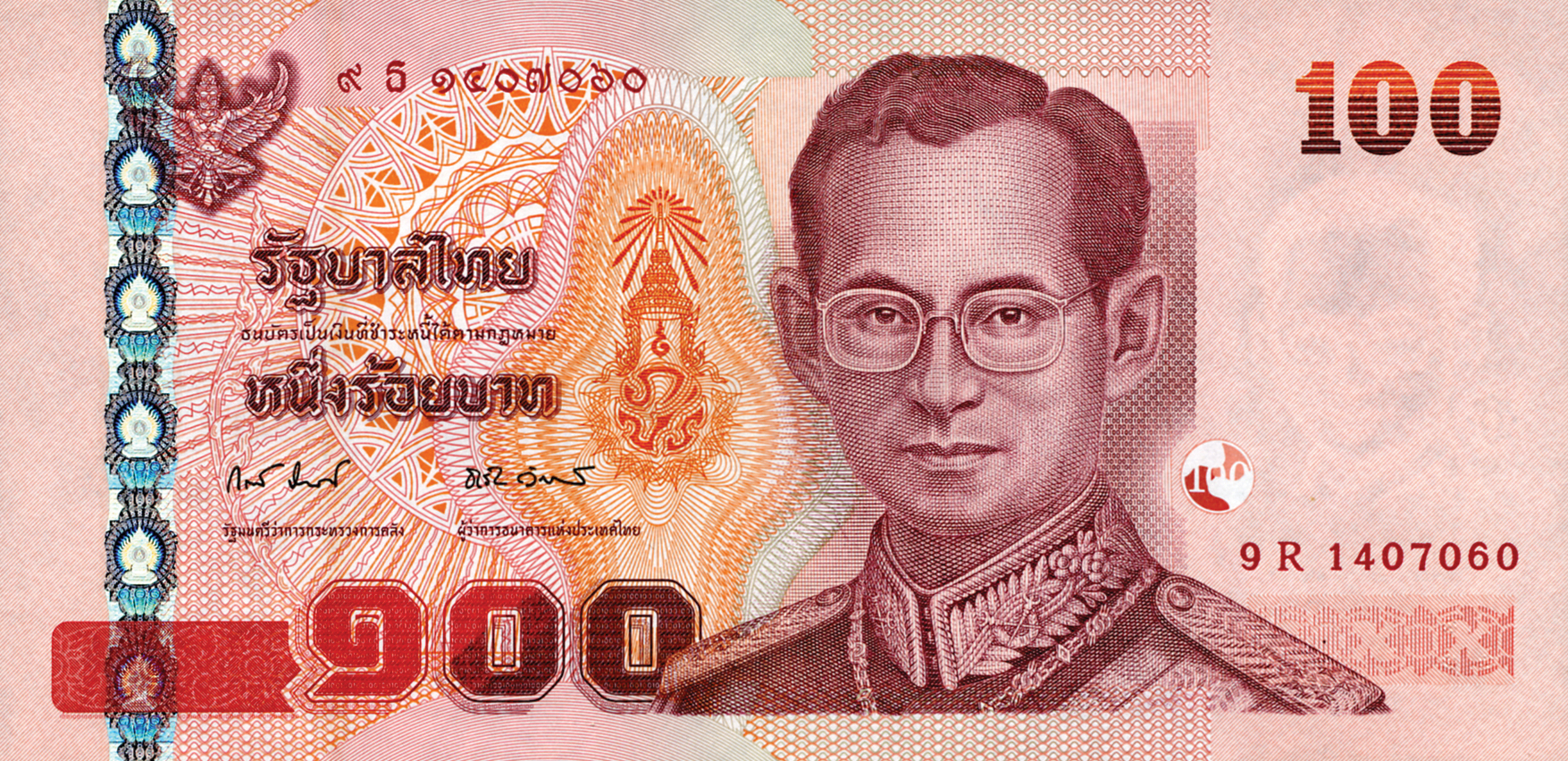
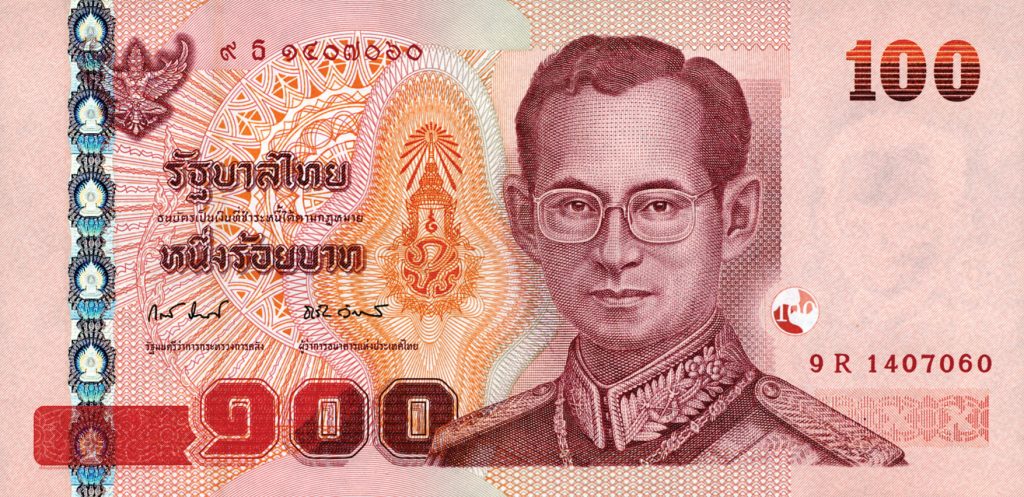
At first glance, the commemorative note closely resembles the regular Series 16 100-baht banknote, maintaining the familiar dimensions, dominant red-orange color palette, and overall layout. The obverse features the finely engraved portrait of King Bhumibol Adulyadej in military uniform, rendered in meticulous intaglio lines that convey both authority and restraint. Traditional Thai ornamental motifs radiate behind the portrait, combining geometric guilloché patterns with symbolic elements associated with monarchy, Buddhism, and national identity.
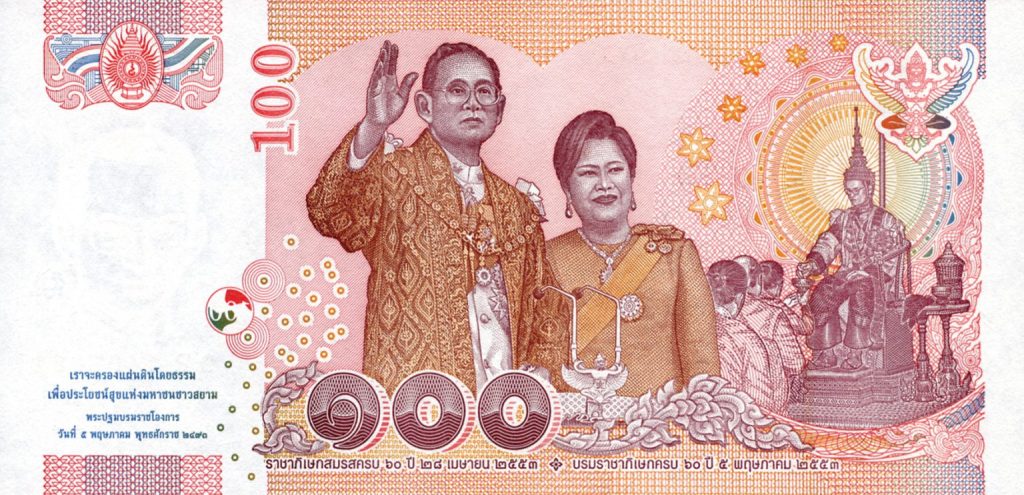
The reverse is where the commemorative character becomes unmistakable. Instead of the standard vignette, the back depicts the King and Queen standing together, dressed in formal royal attire. The composition emphasizes balance and unity: the King raises his hand in a gesture of greeting and benevolence, while the Queen stands beside him, embodying dignity and continuity. Behind them appear additional symbolic elements, including royal emblems, architectural references, and ceremonial motifs, all arranged in layered patterns that create depth without overwhelming the central figures.
Printing Technology and Security Features
From a technical standpoint, the note exemplifies the Bank of Thailand’s advanced security printing capabilities at the beginning of the 21st century. The banknote is printed on high-quality cotton-based paper, offering durability suitable for circulation while preserving the tactile qualities valued in traditional banknote production.
Intaglio printing is the dominant technique, especially evident in the portraits and denomination numerals, which can be felt by touch. Offset lithography provides the complex background colors and smooth tonal transitions, while letterpress elements are used for serial numbers and certain inscriptions. Embedded security features include a metallic security thread, watermarks visible under transmitted light, and microtext integrated into decorative patterns. These features serve a dual purpose: protecting against counterfeiting and reinforcing the visual sophistication of the design.
Specimen versions of the note—produced without overprint, bearing all-zero serial numbers and a specimen identifier—demonstrate the same technical standards and are of particular interest to institutional collections and advanced numismatists.
Symbolic and Cultural Meaning
The primary symbolic function of the note is to commemorate six decades of royal marriage, an event deeply resonant in Thai society. King Bhumibol and Queen Sirikit were widely regarded as moral anchors of the nation, especially during periods of political uncertainty. Their joint portrayal emphasizes partnership, stability, and the continuity of the Chakri dynasty.
More broadly, the note reflects the Thai conception of monarchy as both sacred and civic. The integration of royal imagery into everyday currency transforms the act of exchange into a subtle reaffirmation of national values. Unlike medals or non-circulating commemoratives, this banknote enters daily life, allowing millions of citizens to physically interact with the symbols of the anniversary.
Historical Context
The issuance of the note in 2010 must be understood against Thailand’s broader historical backdrop. The country had undergone rapid economic development, social change, and political tension in the preceding decades. Amid these dynamics, the monarchy remained a unifying institution. The 60th wedding anniversary offered an opportunity not only to celebrate a personal milestone but also to reaffirm continuity at a national level.
Numismatically, Thailand has a long tradition of commemorative banknotes, often tied to royal anniversaries, birthdays, or significant state events. This issue fits within that lineage while standing out for its relatively large print run and its intended circulation alongside regular notes.
Numismatic Significance
For collectors, the 2010 100-baht commemorative occupies an intriguing middle ground. It is neither a rare presentation piece nor a fully ordinary circulation note. Its fixed print quantity, distinct reverse design, and association with a major royal anniversary grant it enduring appeal. Condition, serial number patterns, and provenance—especially for specimen notes—play a crucial role in determining desirability.
From an academic perspective, the note serves as a case study in how modern states use currency as a medium of memory, blending security technology, fine art, and political symbolism. It demonstrates that even in an era increasingly dominated by digital payments, the banknote remains a powerful cultural artifact.
Conclusion
The 2010 Thailand 100-baht commemorative banknote is far more than a modified design for a celebratory occasion. It is a carefully engineered object that encapsulates history, technology, and cultural meaning within a single piece of paper. For numismatists and researchers, it offers insight into Thailand’s approach to commemorative issues, the enduring role of monarchy in national identity, and the evolving artistry of modern banknote production.