
Mongolia 20,000 Tögrög Commemorative Banknote (2006): Celebrating 800 Years of the Great Mongol State
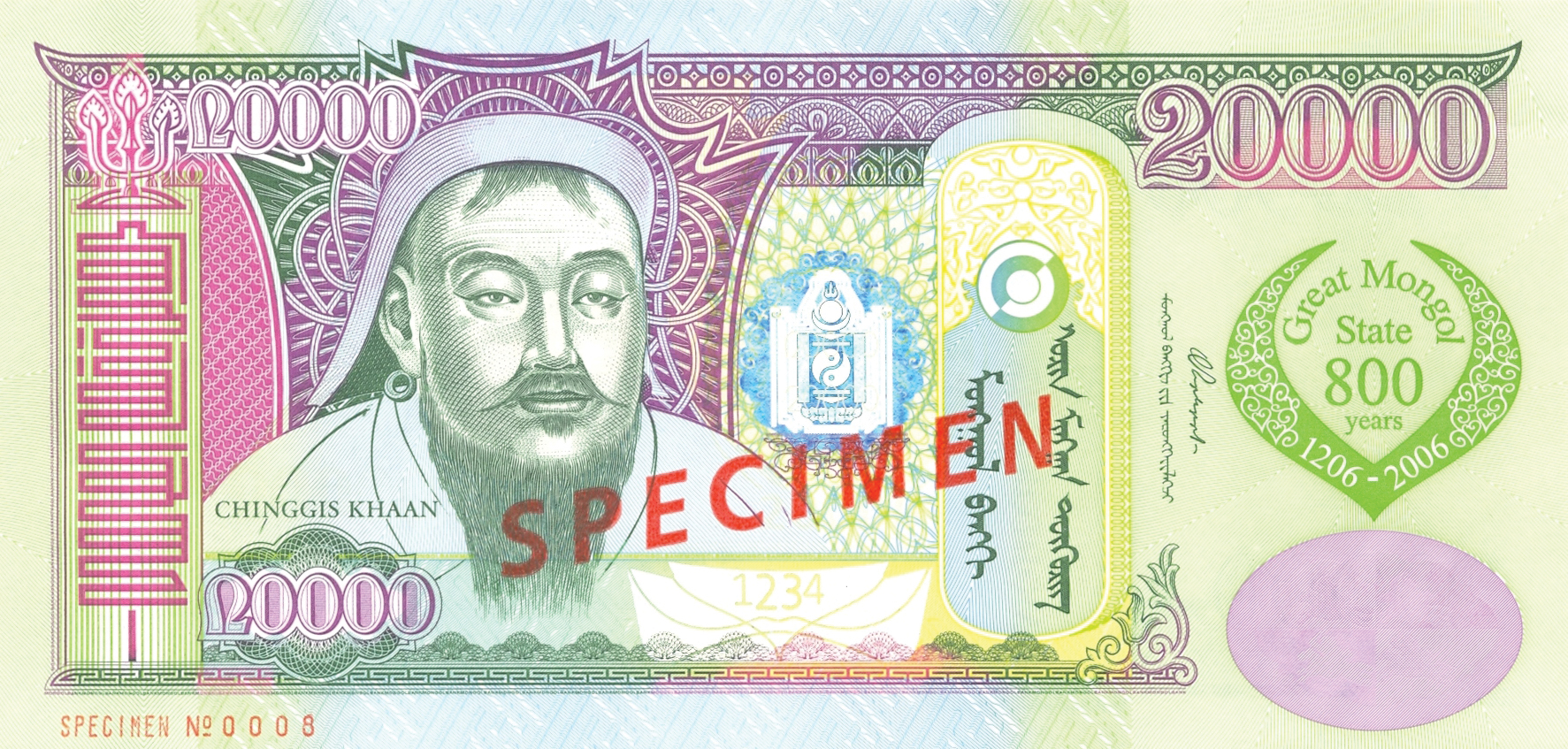
In October 2006, Mongolia marked a historic milestone not only in its national memory but also in the evolution of modern banknote technology. On 2 October 2006, the Mongol Bank officially introduced the 20,000-tögrög banknote into circulation, making it the highest denomination of the Mongolian currency at that time. Alongside the regular issue, a special commemorative overprinted version was produced to celebrate the 800th anniversary of the Great Mongol State (1206–2006)—an event of profound historical and cultural significance for Mongolia and the world.
Historical Context: 800 Years of the Great Mongol State
The year 1206 marks the founding of the Great Mongol State, when Temüjin was proclaimed Chinggis Khaan (Genghis Khan) and united the Mongol tribes. This event laid the foundation for what would become the largest contiguous land empire in world history. By commemorating this anniversary in 2006, Mongolia reaffirmed its national identity, sovereignty, and pride in a civilization that reshaped Eurasian history through governance, trade networks, diplomacy, and military innovation.
Issuing a commemorative banknote was a deliberate choice. Currency is one of the most visible symbols of statehood, circulating daily in the hands of citizens. By embedding this anniversary into the highest-denomination note, Mongolia elevated the memory of the Great Mongol State into everyday economic life.
Design and Iconography: Who Appears on the Banknote?
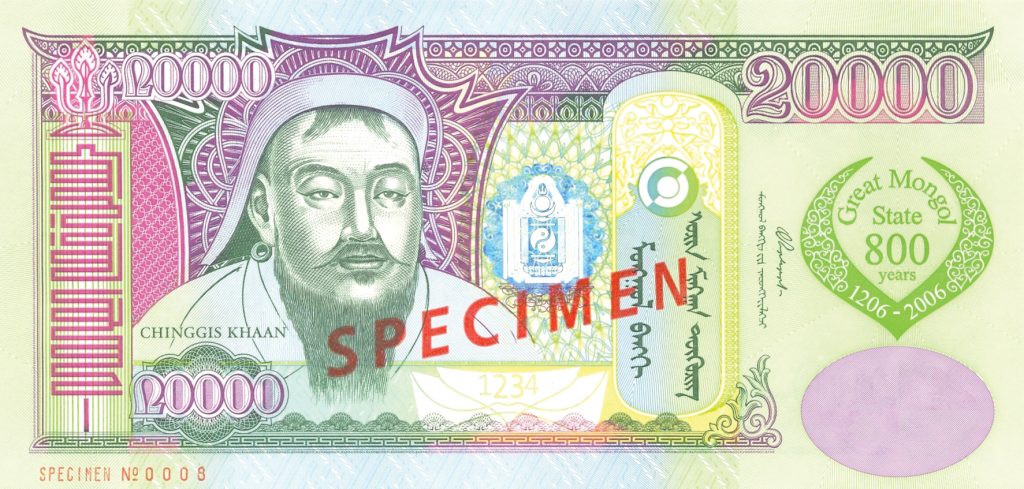
The front (obverse) of the 20,000-tögrög note features a powerful engraved portrait of Chinggis Khaan, Mongolia’s most revered historical figure. His depiction is calm, authoritative, and dignified, reflecting his role not merely as a conqueror but as a lawgiver and unifier. Chinggis Khaan’s image has long appeared on Mongolian currency, but its presence on this denomination underscores his enduring centrality to Mongolian national consciousness.
Surrounding the portrait are intricate ornamental patterns inspired by traditional Mongolian art, blending historical motifs with modern banknote aesthetics. Prominently printed on commemorative examples is the green circular emblem reading “Great Mongol State – 800 years – 1206–2006”, clearly identifying the note’s celebratory purpose.
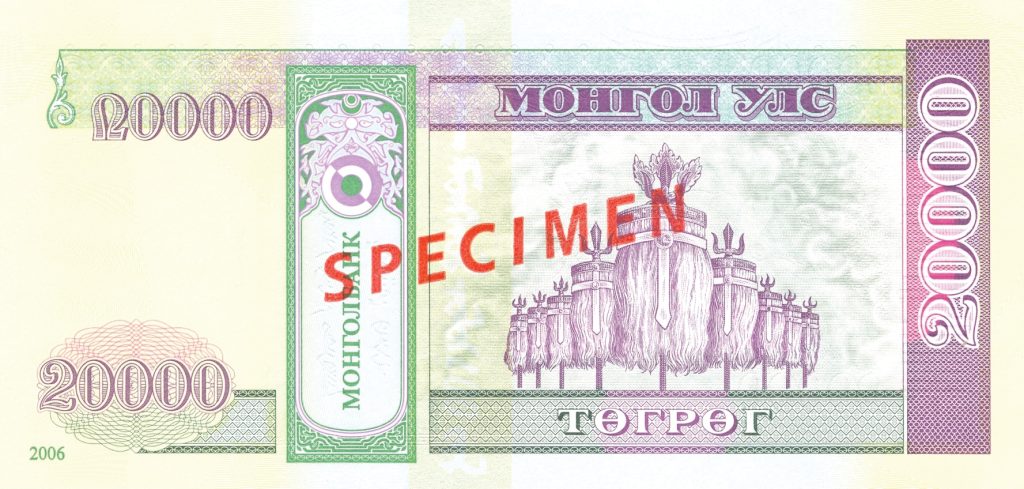
The back (reverse) of the note depicts a monumental ceremonial scene associated with Mongolian statehood and tradition. Stylized architectural and symbolic elements emphasize continuity between Mongolia’s imperial past and its modern republic. The design communicates stability, heritage, and cultural depth rather than militarism, aligning with Mongolia’s contemporary national narrative.
Security Innovation: A World First in Banknote Technology
Beyond its historical symbolism, this banknote is globally significant for its technological innovation. The commemorative 20,000-tögrög was the first banknote in the world to use Giesecke & Devrient’s LOOK® (Laser Originated Optical Key) technology. This advanced security feature employs laser-induced effects within the paper substrate, ink, foil, and varnish, creating optical elements that are extremely difficult to counterfeit.
Most notably, the four-digit serial number on the commemorative version was produced using LOOK technology, making it both a functional identifier and a security element. This breakthrough positioned Mongolia at the forefront of anti-counterfeiting innovation, demonstrating that even smaller economies could lead in cutting-edge currency design.
Additional security features include a holographic security thread with demetallized denomination, fine-line engraving, and a watermark portrait of Kaysone Phomvihane—a respected revolutionary leader from Laos—used as a watermark reference model in the paper production process, highlighting international cooperation in banknote manufacturing.
Circulation and Numismatic Significance
While the standard 20,000-tögrög note entered regular circulation, the commemorative overprinted version followed a different path. Evidence suggests that these notes were not widely circulated and were instead issued primarily as numismatic products, often encased in Lucite for preservation. Specimen versions, marked clearly with red “SPECIMEN” overprints, have surfaced in collector circles, while genuine non-specimen commemorative notes remain rare and highly sought after.
Questions remain among collectors regarding the exact print run, pricing, and whether any non-specimen commemorative notes ever circulated at face value. This uncertainty has only increased the banknote’s desirability and mystique within the global numismatic community.
Conclusion: More Than Money
The 2006 Mongolian 20,000-tögrög commemorative banknote is far more than a medium of exchange. It is a statement of national identity, a tribute to Chinggis Khaan, a celebration of 800 years of statehood, and a landmark in banknote security technology. By combining deep historical meaning with pioneering innovation, Mongolia created a banknote that stands as a milestone in both cultural memory and the history of modern currency design.